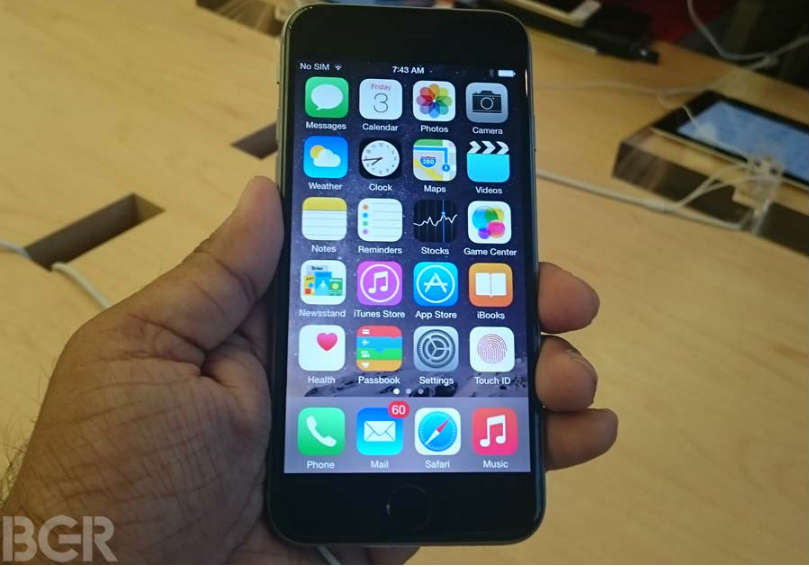



Here’s the uncomfortable truth: mobile isn’t “the future.” It’s the present. And for many businesses, it’s already the primary way customers discover, explore, and decide.
Yet countless startups and established companies still treat mobile like an afterthought — a resized desktop site, a rushed responsive layout, or a “we have an app, so we’re fine” mentality.
They’re not fine.
Table of Contents
ToggleMobile Is Where Your Customers Are
Research and industry commentary — including insights from Benedict Evans — have repeatedly shown that mobile usage continues to dominate digital growth.
People are shopping, browsing, researching, and even making major enterprise decisions on their phones.
Yes — even the executive considering a seven-figure software license is probably first clicking your link while half-watching TV from the couch.
Mobile isn’t a side channel. It’s often the first impression.
Responsive Design + An App Isn’t Enough
Let’s clear something up.
Having:
-
A responsive website
-
A native app
…does not automatically mean you’re mobile-ready.
Responsive design often means shrinking a desktop experience to fit a smaller screen. That’s not mobile-first — that’s desktop-first, just compressed.
Mobile-first means starting from scratch. It means asking:
-
What matters most on a 6-inch screen?
-
What does the user need right now?
-
What’s the fastest path to value?
You design for mobile first. Then — and only then — do you expand to desktop.
Desktop becomes the extension, not the foundation.
The Real Challenge: Small Screen, Big Expectations
Mobile design is constrained by space. That’s both the problem and the opportunity.
On desktop, we got used to clutter:
-
Complex menus
-
Endless navigation options
-
Heavy graphics
-
Long blocks of text
Mobile doesn’t tolerate that.
If you simply make a typical desktop site responsive, you’ll likely need to strip out 80–90% of the content for it to make sense.
Instead of trimming the old experience, rebuild it entirely.
Think clean. Think focused. Think intentional.
5 Practical Ways to Build a Strong Mobile Web Experience
1. Lead with Your Brand
Even in a compact layout, your brand should be unmistakable.
Use:
-
Clear logo placement
-
Consistent colors
-
Recognizable fonts
-
Strong visual identity
Mobile may be minimal, but it shouldn’t feel generic. Every scroll should reinforce who you are.
2. Design for Scroll Behavior
On mobile, scrolling is natural.
Users expect it.
Organize content with priority at the top:
-
Most important message first
-
Supporting details below
-
Secondary information further down
Don’t fear vertical stacking. It’s intuitive and familiar.
3. Simplify the Basics: Copy, Fonts, Images, Navigation
Mobile rewards clarity.
-
Write concise, sharp copy.
-
Use larger, readable fonts.
-
Replace text-heavy sections with strong visuals.
-
Use recognizable menu patterns (like a top-left or top-right hamburger menu).
Images are powerful on mobile — they grab attention and guide interaction. Use them strategically, and make sure they link somewhere meaningful.
4. Make Calls to Action Obvious
What do you want the user to do?
-
Download your app?
-
Sign up for email?
-
Start a free trial?
-
Make a purchase?
Don’t hide it.
Use bold buttons. Use sticky prompts. Make the next step impossible to miss. Mobile users move fast — clarity wins.
5. Test, Measure, Improve
Optimization on mobile is faster because the experience is simpler.
Start by:
-
Shrinking your desktop browser window to simulate smaller screens.
-
Testing on real devices (both iOS and Android).
-
Tracking user behavior with analytics tools like Mixpanel or similar platforms.
Watch how users behave. Where do they drop off? Where do they hesitate? Keep refining until conversions improve.
Mobile experiences evolve quickly — and so should you.
The Bottom Line
Mobile-first is not about squeezing your desktop site into a smaller frame. It’s about rethinking your entire experience around the realities of modern user behavior.
Your customers are already on mobile.
They’re discovering you there.
They’re judging you there.
Design for that reality from the beginning — and let desktop follow.
Because if mobile isn’t your starting point, you’re building backwards.