

Nokia is one of the most recognizable names in the history of mobile technology. For decades, the company was closely associated with mobile phones, from simple feature phones to increasingly sophisticated smartphones. But the Nokia of today looks very different from the company that once dominated the handset market.
After selling its handset business and moving away from consumer phones, Nokia rebuilt itself around telecommunications infrastructure, network technology and enterprise connectivity. More recently, artificial intelligence, cloud computing, automation and advanced networking have become increasingly important to its strategy.
This transformation demonstrates how a technology company can reinvent itself when an established business model no longer provides a sustainable path forward.
Nokia’s Rise in Mobile Phones
Nokia’s mobile-phone story began long before smartphones became mainstream. The company became one of the world’s most successful handset manufacturers during the 1990s and early 2000s.
Its phones became known for their durability, distinctive designs, long battery life and accessible prices. Devices such as the Nokia 3310 became cultural icons, while the company’s broader portfolio reached consumers across developed and emerging markets.
At its peak, Nokia was the world’s largest mobile-phone manufacturer. Its success was built on enormous scale, strong distribution and a powerful global brand.
However, the mobile industry was about to undergo a dramatic transformation.
The Smartphone Revolution
The introduction of modern touchscreen smartphones changed consumer expectations.
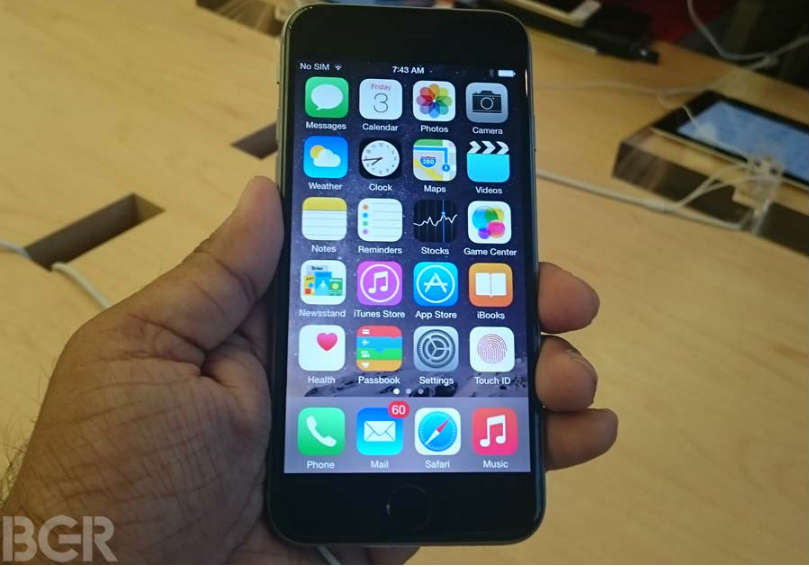
Apple’s iPhone and Android devices created ecosystems in which software, applications, cloud services and touch-based interfaces became central to the mobile experience.
Nokia struggled to respond quickly enough to this shift. Its Symbian platform remained important for years, but it faced growing competition from iOS and Android.
The company eventually partnered with Microsoft and adopted Windows Phone as the primary software platform for its smartphones. Although the partnership produced distinctive devices, it was unable to regain the market position Nokia had previously enjoyed.
The smartphone business became increasingly difficult to sustain.
Selling the Handset Business
A major turning point came in 2014, when Microsoft completed its acquisition of Nokia’s Devices and Services business.
This effectively ended Nokia’s era as a major consumer handset manufacturer.
Rather than disappearing from the technology industry, however, Nokia focused on a different opportunity: telecommunications infrastructure.
The company’s future would increasingly depend on the networks that connect phones, computers, industrial equipment and other devices.
The Shift Toward Network Infrastructure
Nokia’s transformation was built around technologies such as mobile network equipment, broadband infrastructure, optical networking and software.
The acquisition of Alcatel-Lucent in 2016 was an especially significant step. It expanded Nokia’s capabilities across telecommunications and strengthened its position in network infrastructure.
This new Nokia was less visible to ordinary consumers because much of its technology operated behind the scenes.
When someone connects to a mobile network, uses broadband internet or accesses a cloud-based service, sophisticated infrastructure is working in the background.
The Importance of 5G
The development and deployment of 5G created another major opportunity for Nokia.
5G networks are designed to provide high-speed connectivity, lower latency and the ability to support enormous numbers of connected devices.
For telecommunications companies and network operators, 5G is not simply about faster smartphone downloads. It can support industrial automation, connected vehicles, private networks, smart factories and other applications.
Nokia positioned itself as a technology supplier helping operators and enterprises build these next-generation networks.
From Connectivity to Intelligent Networks
The next stage of Nokia’s evolution involves making networks more intelligent.
Modern networks generate enormous amounts of data. Artificial intelligence and machine learning can help analyze that information, identify patterns and automate certain operational decisions.
AI-powered network management can potentially help operators predict equipment problems, optimize network resources and respond more quickly to changing traffic conditions.
This represents an important shift. Instead of networks simply transporting information, they can increasingly use software and AI to understand what is happening and adapt accordingly.
AI and Network Automation
Network automation is becoming increasingly important as infrastructure grows more complicated.
A traditional network may require engineers to manually monitor equipment, identify problems and adjust configurations. AI-driven systems can assist with these processes by continuously analyzing network conditions.
Predictive maintenance is another potential application. Instead of waiting for a component to fail, an intelligent system can identify unusual behavior and alert engineers to a potential problem.
Automation can improve efficiency while allowing human experts to focus on complex decisions.
Cloud and Edge Computing
Nokia’s transformation also intersects with cloud and edge computing.
Traditional cloud architectures can involve sending data to centralized data centres for processing. Edge computing moves some processing closer to where data is generated.
This can be useful for applications that require fast responses, such as industrial systems, connected equipment and certain real-time services.
Advanced networks provide the connectivity needed to support these distributed computing environments.
Nokia’s Role in Enterprise Networks
Nokia’s network expertise is also relevant beyond traditional telecommunications operators.
Businesses increasingly need reliable private wireless networks for factories, ports, mines, logistics centres and other industrial environments.
Private 4G and 5G networks can provide controlled connectivity for machines, sensors, workers and automated systems.
This creates an opportunity for Nokia to participate in the broader digital transformation of industries rather than relying exclusively on consumer mobile services.
Research and Future Technologies
Nokia has continued investing in research through its technology and research organizations.
Future network development is expected to involve increasingly advanced automation, AI-native architectures, cloud technologies and new approaches to connectivity.
The evolution toward 6G is another long-term area of research across the telecommunications industry.
Although the exact capabilities and commercial timeline of future networks will continue to develop, the broader direction is clear: connectivity is becoming increasingly software-driven and intelligent.
The Nokia Brand Still Exists in Phones
Although Nokia itself moved away from its former handset business, the Nokia brand continues to appear on mobile phones through licensing arrangements.
This distinction is important. The company responsible for Nokia’s current network business is not the same consumer-phone operation that dominated the handset market in the early 2000s.
The familiar brand therefore remains visible to consumers while the core Nokia business operates primarily in the infrastructure and technology sector.
Lessons From Nokia’s Transformation
Nokia’s journey offers an important lesson for technology companies.
Market leadership in one generation of technology does not guarantee success in the next. Consumer preferences, software ecosystems and technological platforms can change rapidly.
Nokia’s ability to rebuild around network infrastructure shows the importance of recognizing when a business model needs to change.
The transformation was not simply a move from phones to another product category. It represented a fundamental shift from selling devices directly to consumers toward providing the infrastructure that enables global connectivity.
What the Future Could Hold
AI-powered networks could become an increasingly important part of Nokia’s future.
As networks become more complex and the number of connected devices continues to grow, manual management alone becomes increasingly difficult. Intelligent automation can help operators manage capacity, improve reliability and respond to problems more efficiently.
The convergence of AI, 5G, cloud computing, edge computing and industrial connectivity creates opportunities that would have been difficult to imagine during Nokia’s mobile-phone heyday.
Final Thoughts
Nokia’s transformation from a world-famous mobile-phone manufacturer into a network technology company is one of the most remarkable reinventions in the technology industry.
The company that once competed for space in consumers’ pockets now focuses heavily on the infrastructure connecting people, machines and businesses.
Its future increasingly revolves around intelligent networks, AI, automation, cloud technologies and advanced connectivity.
The story is a reminder that technology companies must continually evolve. Nokia may no longer be defined primarily by the phones people carry, but its role in the technology ecosystem remains significant—because behind every connected device is a network, and increasingly, that network is becoming intelligent.