


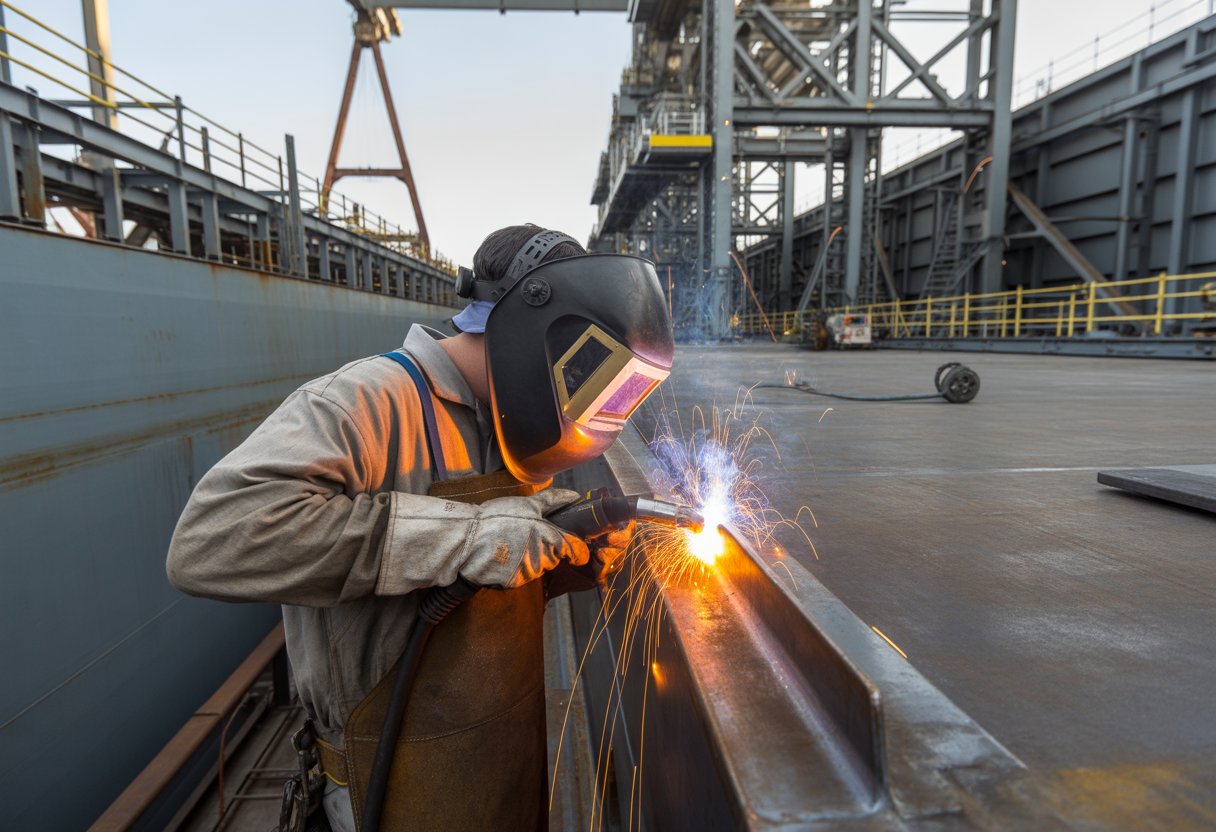
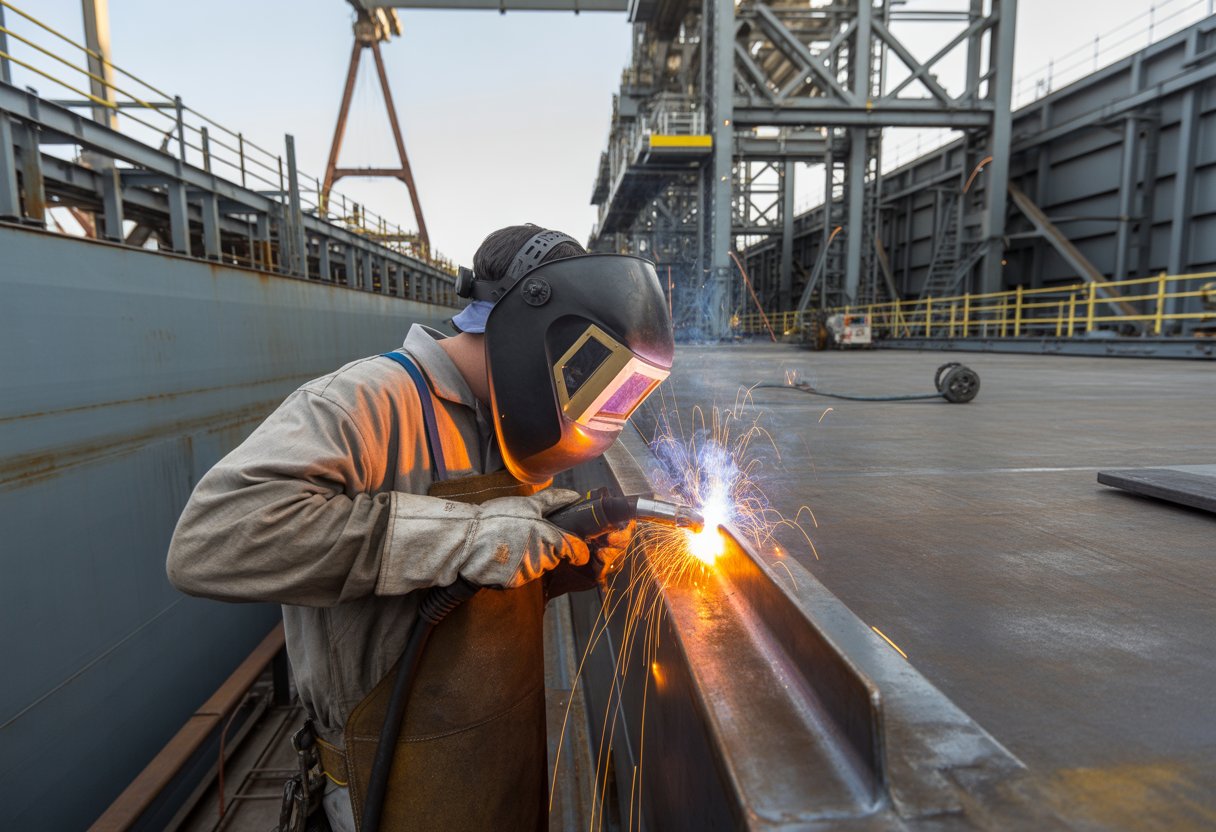
In the demanding worlds of defence and marine engineering, the phrase “built to last” carries far more weight than a simple marketing slogan. Equipment, vessels, and military infrastructure must perform reliably under some of the harshest conditions imaginable. From naval warships navigating corrosive seawater to armored military vehicles operating in extreme environments, every component must be engineered for exceptional durability. At the heart of this reliability lies one critical process: high-quality welding.
Defence and marine welding involves more than joining metal parts together. It requires precision, specialized materials, strict quality control, and compliance with rigorous industry standards. A single welding defect can compromise structural integrity, leading to costly repairs, operational failures, or even life-threatening situations. Understanding what “built to last” truly means helps highlight the importance of skilled craftsmanship and advanced welding technologies in these industries.
Table of Contents
ToggleThe Importance of Durability in Defence and Marine Applications
Defence equipment and marine vessels are expected to operate for decades while enduring constant stress. Ships face continuous exposure to saltwater, high waves, changing temperatures, and heavy loads. Military vehicles and equipment encounter vibrations, impacts, rough terrain, and demanding operational environments.
Unlike many commercial products, defence and marine assets cannot afford frequent downtime. Repairs are often expensive and may not be possible during critical missions. As a result, durability becomes a key design objective, and welding quality plays a central role in achieving it.
Strong, long-lasting welds help ensure that structures maintain their strength throughout their service life, reducing maintenance costs and improving operational readiness.
Why Welding Matters So Much
Welding forms the backbone of countless defence and marine structures. Hulls, decks, bulkheads, pipelines, fuel tanks, support frames, pressure vessels, and armored assemblies all depend on secure welded joints.
A properly executed weld provides:
- High structural strength
- Resistance to fatigue
- Excellent load-bearing capability
- Long-term corrosion protection
- Improved safety
- Reduced maintenance requirements
Poor-quality welds, on the other hand, may develop cracks, corrosion, or weaknesses that grow over time, potentially leading to catastrophic failures.
Materials Used in Defence and Marine Welding
Modern defence and marine projects utilize a variety of specialized materials selected for strength, corrosion resistance, and performance.
Common materials include:
High-Strength Steel
High-strength steel is widely used in naval ships, submarines, offshore platforms, and military vehicles due to its excellent durability and impact resistance.
Stainless Steel
Stainless steel offers superior corrosion resistance, making it ideal for marine environments where constant exposure to saltwater accelerates rust formation.
Aluminum Alloys
Aluminum provides lightweight construction while maintaining excellent strength. It is commonly used in patrol boats, naval superstructures, and fast-response vessels.
Titanium Alloys
Titanium is valued for its exceptional strength-to-weight ratio and resistance to corrosion, making it suitable for submarines, aerospace components, and specialized defence equipment.
Each material requires unique welding techniques, filler metals, and heat control to ensure reliable performance.
Precision Is Essential
In defence and marine welding, precision is not optional—it is mandatory. Every weld must meet exact engineering specifications, often measured to extremely tight tolerances.
Professional welders carefully control factors such as:
- Heat input
- Weld penetration
- Joint preparation
- Alignment
- Distortion control
- Cooling rates
Even small imperfections can reduce structural strength or create stress concentration points that may fail under repeated loading.
Advanced welding procedures help ensure consistent quality across every project.
Corrosion Resistance Is a Major Priority
Marine environments are among the most corrosive settings for metal structures. Saltwater, humidity, and changing temperatures accelerate corrosion that can weaken welded joints over time.
To improve long-term durability, manufacturers often use:
- Corrosion-resistant alloys
- Protective coatings
- Specialized welding consumables
- Cathodic protection systems
- Surface finishing treatments
These measures help extend the lifespan of ships, offshore structures, and defence equipment operating in challenging environments.
Advanced Welding Technologies
Modern defence and marine fabrication increasingly relies on advanced welding technologies to achieve higher precision and stronger joints.
Popular techniques include:
Gas Metal Arc Welding (GMAW)
Often used for high-production manufacturing, GMAW provides efficient, high-quality welds with good penetration.
Gas Tungsten Arc Welding (GTAW)
Also known as TIG welding, GTAW offers exceptional precision and is commonly used for stainless steel, aluminum, and titanium components.
Flux-Cored Arc Welding (FCAW)
FCAW performs well in outdoor environments and is frequently used for heavy structural fabrication.
Laser Welding
Laser welding enables highly accurate, low-distortion welds suitable for precision defence components.
Robotic Welding
Automation improves consistency, reduces human error, and enhances production efficiency while maintaining strict quality standards.
Quality Inspection and Testing
Being “built to last” requires extensive inspection before equipment enters service.
Common testing methods include:
- Visual inspection
- Ultrasonic testing
- Radiographic (X-ray) inspection
- Magnetic particle testing
- Dye penetrant testing
- Destructive testing for sample welds
These inspection techniques help detect hidden flaws that may not be visible on the surface.
Strict quality assurance programs ensure every weld meets military and marine certification requirements.
Compliance with Industry Standards
Defence and marine welding projects must comply with internationally recognized standards and regulations. These standards help ensure safety, reliability, and consistent manufacturing quality.
Examples include:
- American Welding Society (AWS) standards
- ISO welding certifications
- Classification society requirements
- Military specifications
- Naval engineering guidelines
Certified welding procedures and qualified welders are essential for meeting these demanding requirements.
Skilled Welders Make the Difference
Even with advanced equipment and automation, experienced welders remain indispensable. Defence and marine welding requires specialized training, technical expertise, and a deep understanding of metallurgy and fabrication processes.
Professional welders must be capable of working with complex materials, interpreting engineering drawings, following detailed welding procedures, and maintaining precision under demanding conditions.
Their craftsmanship directly impacts the safety, reliability, and longevity of critical infrastructure and equipment.
The Future of Defence and Marine Welding
Emerging technologies are reshaping the welding industry. Artificial intelligence, robotic automation, digital monitoring systems, and real-time quality analytics are helping manufacturers produce even stronger and more reliable welds.
Sustainable manufacturing practices, energy-efficient welding equipment, and advanced materials are also becoming increasingly important as industries seek to reduce environmental impact while maintaining exceptional performance.
These innovations will continue to enhance durability and efficiency in defence and marine construction.
Conclusion
In defence and marine welding, “built to last” represents a commitment to quality, precision, and long-term reliability. It means designing and fabricating structures that can withstand harsh environments, heavy loads, corrosion, and decades of demanding service without compromising safety or performance.
Achieving this level of durability requires more than advanced materials—it depends on expert welders, proven welding techniques, rigorous quality inspections, and strict adherence to industry standards. As technology continues to advance, defence and marine welding will play an even greater role in creating resilient vessels, military equipment, and infrastructure that stand the test of time, ensuring mission readiness and operational excellence for years to come.