


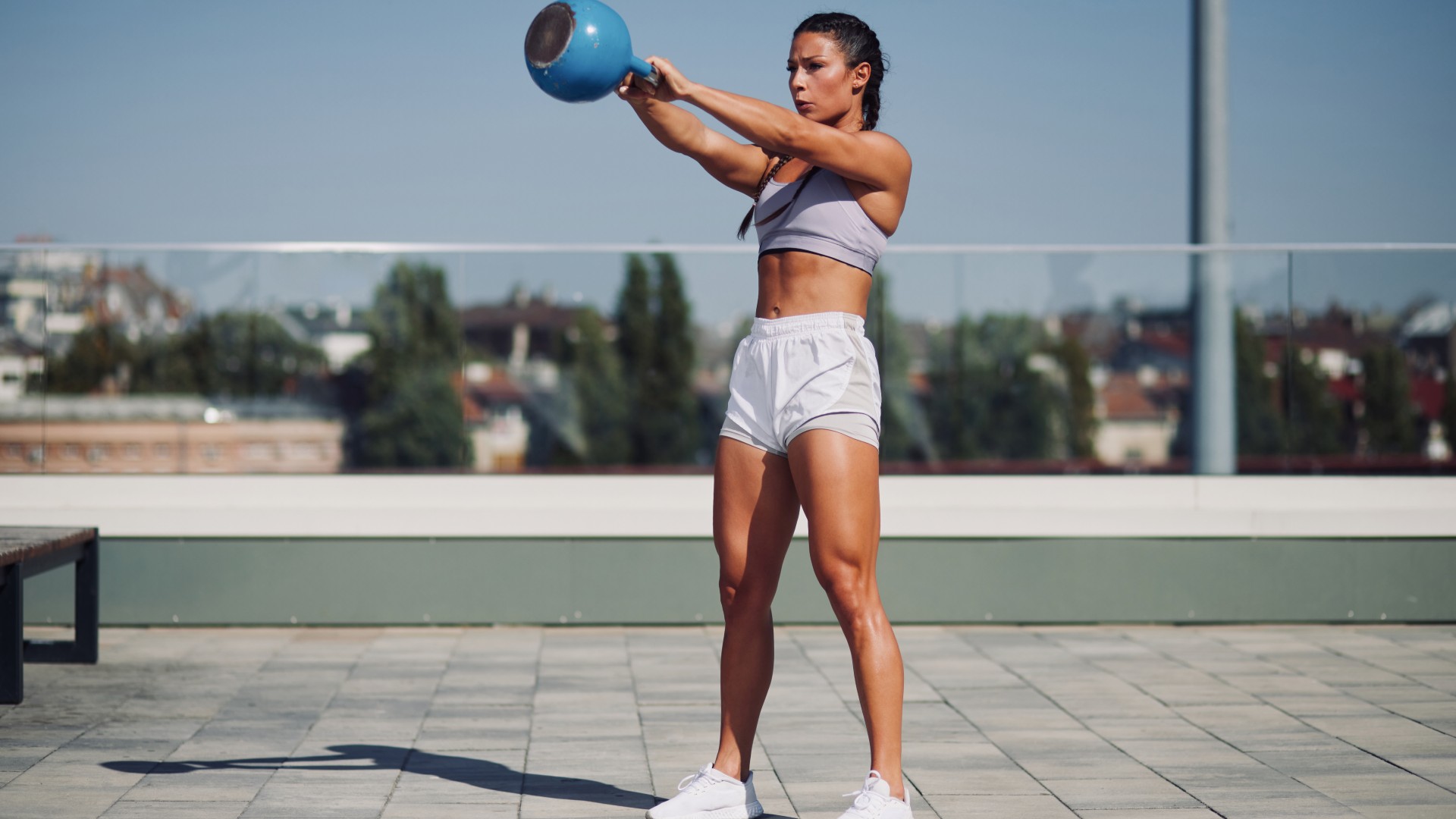
Building a strong posterior chain does not necessarily require an expensive gym membership or a collection of specialized equipment. The muscles across your glutes, hamstrings, lower back, and hips play an important role in everyday movement, athletic performance, posture, and strength. One of the most effective exercises for training this area is the kettlebell swing.
However, kettlebells are not essential. With the right technique and a little creativity, inexpensive alternatives can provide a similar hip-hinge training stimulus.
What Is the Posterior Chain?
The posterior chain refers to the group of muscles located along the back side of the body. It includes the gluteal muscles, hamstrings, spinal erectors, and other muscles that contribute to hip and trunk movement.
These muscles work together when you bend, lift, jump, run, or stand up from a seated position. Developing them can contribute to overall strength and movement efficiency.
Why Kettlebell Swings Are So Effective
The kettlebell swing is primarily a hip-hinge exercise rather than a traditional squat. The movement involves driving the hips forward explosively while allowing the kettlebell to travel through a controlled arc.
A properly performed swing can train the glutes and hamstrings while also challenging the muscles responsible for stabilizing the torso. Because the movement can be performed repeatedly, swings can also provide a cardiovascular challenge.
The Basic Kettlebell Swing Technique
Start with the kettlebell several inches in front of your feet. Stand with your feet approximately shoulder-width apart and maintain a neutral spine.
Hinge at your hips and reach your hands toward the kettlebell. Pull it back between your legs, then drive your hips forward to create momentum.
The kettlebell should rise because of the force generated by your hips rather than because you lift it primarily with your arms. At the top, your body should be tall and controlled.
Allow the kettlebell to return between your legs and repeat the hip-hinge motion.
Beginners should prioritize technique and control instead of trying to swing the heaviest possible weight.
Cheap Alternative: A Backpack
A sturdy backpack filled with books, water bottles, or other secure household items can provide an inexpensive resistance option.
Make sure the contents cannot shift during the exercise and that the backpack is strong enough to handle repeated movement. Hold it securely by the appropriate strap or use it only for controlled hip-hinge exercises that suit its design.
The goal is to reproduce the hip-driven movement pattern, not necessarily to perfectly replicate the kettlebell swing.
Dumbbells Can Also Work
If you already have a dumbbell at home, it can serve as another alternative. A single dumbbell can be held securely with both hands while performing a similar hip-hinge movement.
However, the shape and grip of a dumbbell differ from a kettlebell, so the movement should be adapted rather than forcing an identical technique.
Resistance Bands
Resistance bands can provide another affordable option for strengthening the posterior chain. Band-resisted hip hinges, pull-throughs, and similar exercises can emphasize the glutes and hamstrings.
Bands are particularly useful for home workouts because they take up little space and are available in different resistance levels.
Bodyweight Exercises
You do not always need external resistance to train your posterior chain. Exercises such as glute bridges, single-leg glute bridges, hip hinges, and controlled bodyweight good mornings can provide useful training stimuli.
Bodyweight exercises can also help beginners learn how to control their hips and maintain a stable torso before adding external resistance.
Romanian Deadlifts
Romanian deadlifts are another effective posterior-chain exercise. They emphasize the hamstrings and glutes through a controlled hip hinge.
A dumbbell, barbell, or other suitable resistance can be used. The movement requires careful attention to spinal position and should be performed with a manageable load.
How to Choose the Right Alternative
The best low-cost alternative depends on what equipment you already have, your training experience, and the type of movement you want to perform.
If you want an explosive conditioning exercise, a suitable kettlebell may be worthwhile. If your primary goal is strengthening the glutes and hamstrings, exercises such as Romanian deadlifts, glute bridges, and band pull-throughs can be useful alternatives.
You do not need expensive equipment to create an effective home workout.
Common Swing Mistakes
One common mistake is turning the swing into a squat. The movement should primarily come from hinging at the hips.
Another mistake is lifting the kettlebell with the arms. Your hips should generate most of the movement’s power.
Rounding the lower back, overextending the spine at the top, or using excessive weight can also compromise technique. Beginners should learn the hip-hinge pattern before progressing to faster or heavier swings.
Progress Gradually
Strength training works best when resistance and volume increase gradually. Start with a manageable variation and focus on controlled technique.
As your movement becomes more consistent, you can gradually increase repetitions, resistance, or training volume. Rest between sets and allow your muscles adequate recovery.
Anyone with a history of back, hip, or other musculoskeletal problems should consider speaking with a qualified healthcare professional before beginning a new exercise program.
Conclusion
Kettlebell swings are a practical way to train the posterior chain while combining strength and conditioning. But you do not need expensive equipment to work the same general muscle groups.
Backpacks, dumbbells, resistance bands, and bodyweight exercises can all contribute to an effective home training routine. The most important factors are proper hip-hinge mechanics, appropriate resistance, gradual progression, and consistency.
Whether you train with a kettlebell or a household alternative, focusing on safe technique can help you build stronger glutes and hamstrings without spending a fortune on fitness equipment.