

What if the very devices your team depends on are quietly exposing your network to risk? Businesses invest heavily in firewalls, intrusion detection, and advanced threat intelligence—but these systems are primarily designed for traditional endpoints like desktops and servers. Mobile devices, however, operate in a completely different way.
They constantly shift between corporate networks and public Wi-Fi, run apps with varying levels of trust, and handle sensitive data in unpredictable environments. The challenge isn’t a lack of security—it’s the need for protection specifically built for mobile behavior.
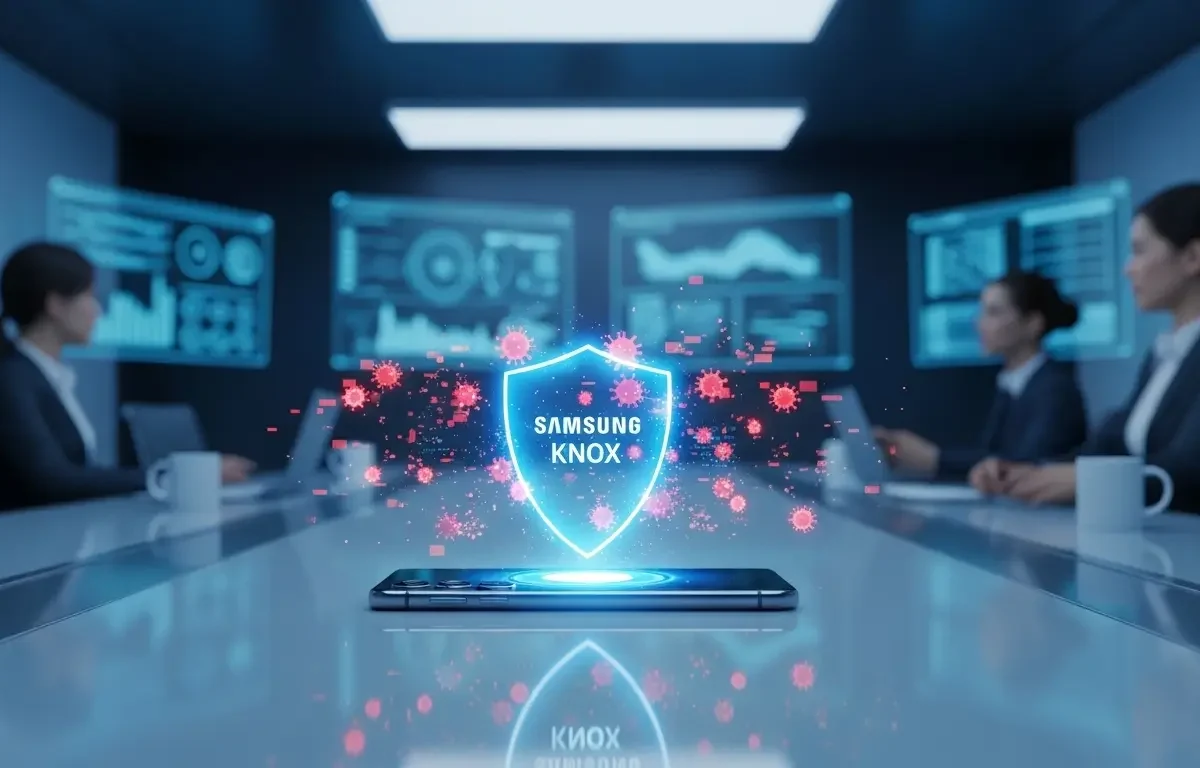
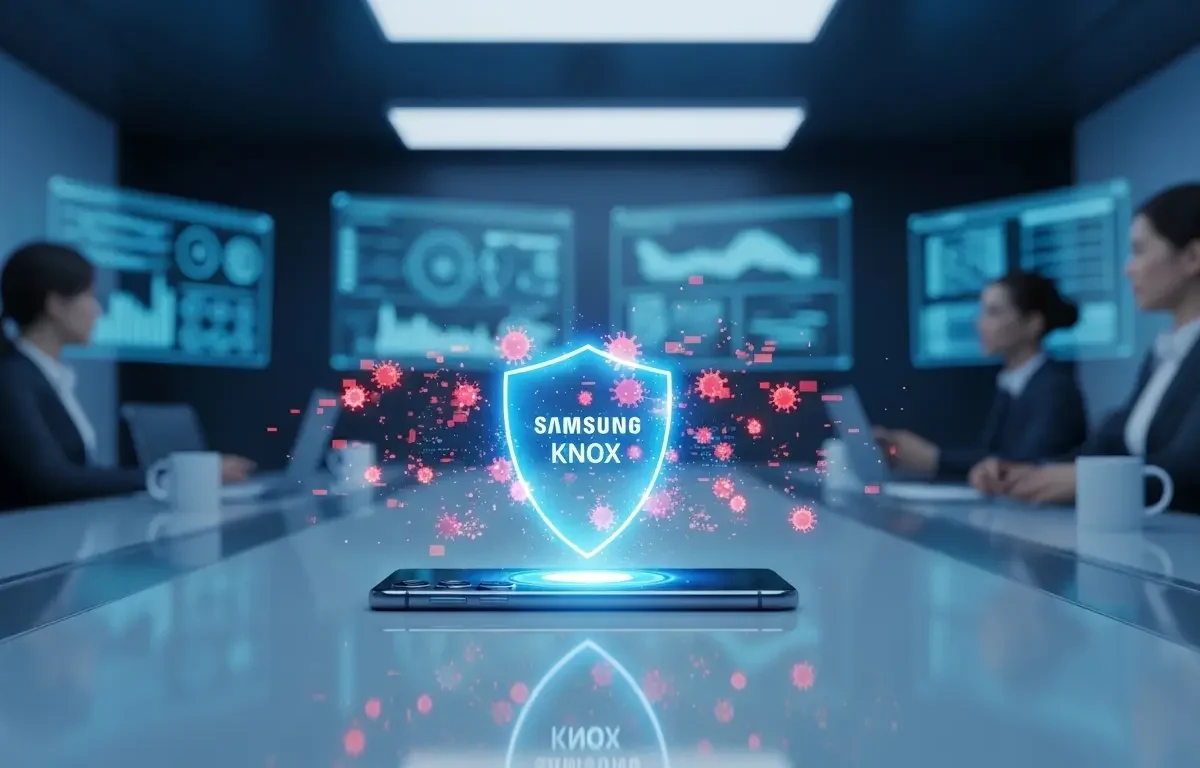
That’s exactly where Samsung Knox comes in.
Secure Connections with Samsung Secure Wi-Fi
Wireless connectivity is essential, but public networks are often vulnerable. Hackers can intercept data, steal credentials, or track user activity on unsecured Wi-Fi.
Samsung addresses this with Secure Wi-Fi, a feature designed to keep connections private and protected.
What it offers:
- Advanced encryption: Uses IKEv2 protocols with periodic key updates to keep data secure
- Two-way authentication: Confirms both server and user identity before connecting
- Automatic activation: Turns on when connecting to unsafe networks like cafés or airports
- Enhanced privacy: Routes traffic through dual relays to prevent tracking
Smarter Network Control with Knox Firewall
Traditional mobile firewalls often lack flexibility—they simply allow or block traffic without much insight. This makes it hard for IT teams to enforce precise policies or investigate issues.
Knox Firewall takes a more intelligent approach.
Instead of broad rules, it enables app-level network control. Each application can have its own permissions based on its role and risk level. For example, a sensitive file viewer can be restricted to specific IPs, while collaboration tools can be limited to approved domains.
What makes it powerful:
- App-specific network rules instead of blanket permissions
- Detailed logs including app name, domain/IP, and timestamps
- Support for IPv4, IPv6, domain, and subdomain filtering
- Built-in architecture with no extra performance burden
Zero Trust Access That Works with Your VPN
Traditional security models rely heavily on perimeter protection—but that’s no longer enough. Access decisions must continuously consider device health, user identity, and context.
Samsung’s Zero Trust Network Access (ZTNA) framework brings this approach to mobile—without replacing your existing VPN.
By using micro-segmentation, it separates network access by app and domain. This reduces the risk of attackers moving across systems if a breach occurs.
Key capabilities:
- Split DNS tunneling for better performance and security balance
- Context-aware policies using app identity, version, and signature
- Real-time policy updates based on device and usage conditions
- Privacy-focused design that respects user and enterprise boundaries
The Power of an Integrated Security Ecosystem
Samsung Knox isn’t just a collection of features—it’s a unified platform. Security signals are shared across the device in real time. For instance, detecting a phishing attempt can automatically trigger stricter firewall rules or even a hardware-level lockdown.
Because Knox is built directly into Samsung Galaxy devices, organizations avoid the hassle of juggling multiple tools or vendors. It also meets major compliance standards and integrates smoothly with leading enterprise management systems.
Final Thoughts
Mobile devices are now central to business operations—but they also introduce new risks that traditional security tools weren’t designed to handle. Samsung Knox fills this gap with mobile-first protection, combining secure connectivity, granular control, and Zero Trust principles.
The result? A smarter, more adaptive defense system that keeps your data—and your business—secure in an increasingly mobile world.